For decades, we were taught to fear fat. But the Mediterranean table has always told a different story — one in which good ingredients, thoughtful choices and a little extra virgin olive oil make all the difference.
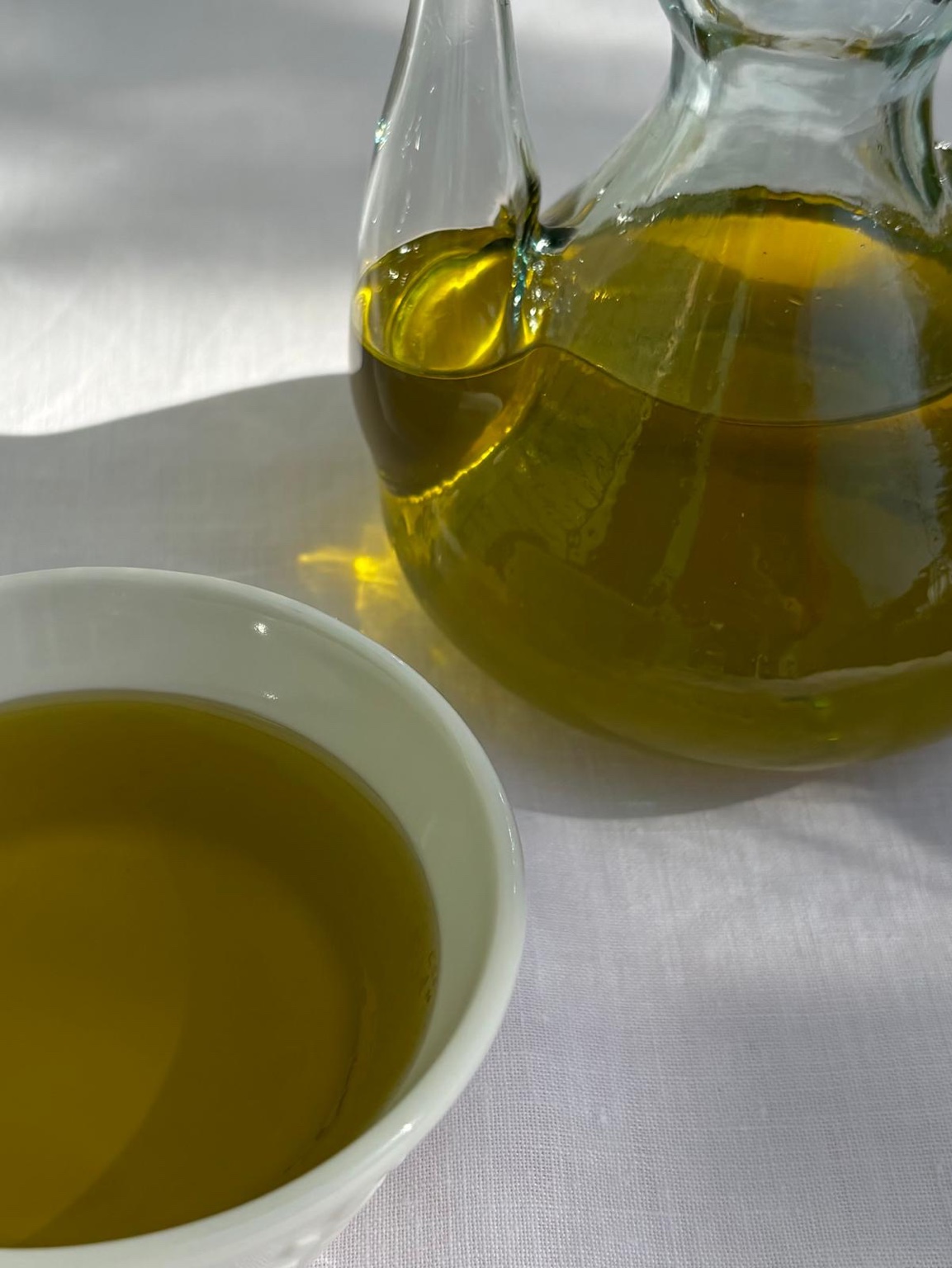
There was a time when low-fat sounded like another word for healthy.
Supermarket shelves filled with fat-free yoghurt, light biscuits and products promising all the flavour with none of the guilt. Fat became the dietary villain, something to avoid, measure or remove altogether.
And yet, across the Mediterranean, olive oil continued to be poured over ripe tomatoes, warm bread, grilled vegetables and bowls of beans.
Perhaps the Mediterranean kitchen understood something that diet culture had forgotten.
The question was never simply whether fat was good or bad. It was which fats we chose — and what we ate them with.
The Fat We Forgot We Needed
Despite its complicated reputation, fat is not an optional ingredient in a healthy diet.
It is an essential macronutrient, necessary for the structure of our cells, the normal functioning of our bodies and the absorption of vitamins A, D, E and K.
It also provides essential fatty acids that the body cannot produce on its own.
And, of course, it brings energy. At nine calories per gram, fat is more energy-dense than either protein or carbohydrates.
But nutritional value cannot be reduced to a calorie count.
What matters is the bigger picture: the source of the fat, the balance of the diet and the foods we choose to eat together.
A handful of walnuts, a portion of oily fish and a spoonful of extra virgin olive oil are very different foods from a heavily processed snack containing industrial trans fats.
They may all contain fat, but they do not offer the same nutritional qualities.
What Longevity Research Tells Us
The relationship between dietary fat and long-term health is also part of the scientific conversation about ageing and longevity.
In a 2022 review published in Cell, researchers Valter Longo and Rozalyn Anderson explored how dietary patterns may influence healthy ageing.
Their proposed longevity-oriented dietary pattern includes approximately 25–35% of daily energy from fats, predominantly from plant sources.
In his practical dietary guidance, Longo also gives olive oil a prominent role, suggesting approximately three tablespoons a day alongside a handful of nuts.
These are not universal rules or guarantees of a longer life. Dietary needs differ according to age, health, activity and total energy requirements.
But the broader message is worth remembering.
Healthy eating is not necessarily about removing fat. It is about choosing it wisely.
The Mediterranean Art of Eating Well
If there is one ingredient that captures this philosophy, it is extra virgin olive oil.
Its place in Mediterranean cooking is both practical and cultural.
Made by mechanically extracting oil from olives, extra virgin olive oil is rich in monounsaturated fats, particularly oleic acid. It also contains naturally occurring compounds, including polyphenols, whose levels vary depending on the olives, production process and storage conditions.
But its appeal goes beyond nutrition.
A good extra virgin olive oil can taste grassy, fruity, peppery or pleasantly bitter. It can transform the simplest ingredients without overwhelming them.
Think of a tomato at the height of summer, sliced and sprinkled with salt.
A bowl of chickpeas with rosemary.
A piece of freshly toasted bread.
A plate of roasted vegetables, still warm from the oven.
Add a little extra virgin olive oil, and these everyday foods become something worth lingering over.
That is the quiet beauty of Mediterranean cooking: it rarely asks ingredients to become more complicated than they need to be.
Perhaps We Have Been Asking the Wrong Question
For too long, the language of healthy eating has centred on what we should eliminate.
Less fat. Less pleasure. Less of everything.
But the Mediterranean table suggests another approach.
Choose ingredients carefully. Eat a variety of foods. Make room for vegetables, legumes and whole grains. Prefer unsaturated fats. And enjoy the flavours that make a meal memorable.
There is no need to fear a thoughtful drizzle of extra virgin olive oil.
Perhaps the question is not how much we can take away from our plates.
Perhaps it is what deserves a place on them.
Because eating well should be about more than restriction.
It should be about nourishment, flavour and the everyday pleasure of sharing good food.
And that is something worth keeping at the table.
This article is intended for general educational purposes and does not replace personalised medical or nutritional advice.